You don't have to carry it
alone anymore.
Trauma-informed therapy, peer support groups, and one-on-one advocate sessions — for survivors of every age, background, and stage of leaving (or staying). in person or remote, sliding-scale or completely free. Your pace, your call.
Trauma-informed
Every clinician on staff is trained in evidence-based trauma care.
Confidential
Records are protected by state and federal privilege. Your call.
Interpreters available
We provide professional interpreters for any language survivors need.
Sliding scale
$0–$80/session based on income. Most survivors pay nothing.
Three doors into the same support.
Use one. Use all three. Move between them as your life shifts. There's no "right" entry point — only the one that feels possible right now.
Individual therapy
Weekly or biweekly one-on-one sessions with a licensed clinician trained in trauma. EMDR, CBT, somatic, and narrative approaches available. You choose what works.
Peer support groups
A small circle of survivors meeting weekly to share, listen, and rebuild trust. Facilitated by a licensed counselor. Confidential. No talking out of the room.

Children & family
Play-based therapy for kids ages 4–17, plus parent-child sessions to rebuild attachment after the chaos. Run by our children's program team.
Find a circle that fits.
Groups run in 8-week cycles. New cohorts start every other month. Drop-in groups (marked) are open every week — no commitment.
Survivors' circle
Healing After Harm
After leaving
While you're still there
Teen survivors (15–19)
Mothers' group
LGBTQ+ survivors
Grandparents raising grandkids
Your first call to your first session.
Call or text — no script needed.
Tell our intake advocate as much or as little as you want. They'll listen, ask a few questions, and explain what's available. The whole call is around 15 minutes.
We match you to a clinician.
Within 48 hours we'll suggest 2–3 therapists or groups that fit — by language, schedule, identity, and approach. You pick. If the fit isn't right, we re-match.
First session is gentle.
You won't be asked to relive anything you're not ready to share. Session one is mostly about getting comfortable, setting your goals, and learning how this person works.
Eight licensed therapists. Forty years of combined practice.
All clinicians hold an LCSW, LMFT, LPC, or PsyD and are independently licensed in this state. All are trained in trauma-informed care and DV-specific therapy.
Dr. Leila Hashemi
EMDR specialist. 12 years with survivors of intimate-partner violence. Trains other clinicians statewide.
Rosa Mendez
Somatic-experiencing approach. Specializes in maternal trauma and intergenerational patterns.
Tomas Okonkwo
Family-systems therapy. Works with survivors and their adult children rebuilding relationships post-abuse.
Avery Park
Specializes in queer, trans, and non-binary survivors. Co-leads our LGBTQ+ survivors' group.
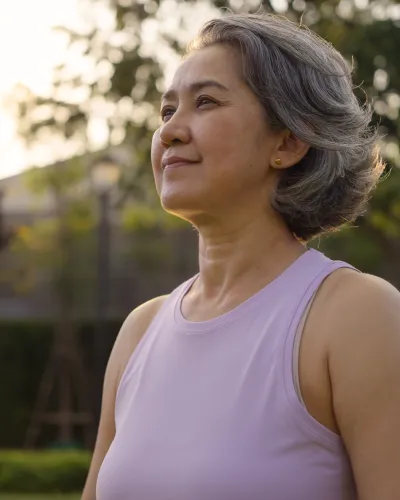
"My therapist didn't fix me. She just sat with me, every Thursday for two years, and refused to look away from the parts of me I was sure would scare her off. That's how I learned my story wasn't shameful. It was just true."
Before you call.
No. Many of the survivors in our therapy program are still living with their abuser. We have a specific group ("While you're still there") for exactly this. We never push anyone toward a decision they're not ready for.
Yes — with the legal limits every licensed therapist must follow (immediate threat to self or others, abuse of a minor or vulnerable adult, court subpoena). We explain those limits clearly in your first session, and they almost never come up.
Sliding scale: $0–$80 per individual session, based on household income and circumstance. Group therapy is always free. We've never turned someone away for inability to pay.
We accept Medicaid and most major insurers, but you don't need insurance to come in. Many survivors prefer not to use insurance because it leaves a paper trail. That's an option you control.
Yes. We offer encrypted video sessions through a HIPAA-compliant platform, plus phone-only sessions for survivors who don't have private space at home.
Therapy that isn't trauma-informed often makes survivors feel worse. Our clinicians are trained specifically in DV trauma — they won't ask you to "just calm down" or skip past what happened. If the first match doesn't click, we'll try another.
Group therapy: usually 1–2 weeks. Individual therapy: 2–4 weeks for most clinicians, longer for specialized matches (LGBTQ+, EMDR). Crisis sessions available within 24 hours.
You don't need to know what to say.
You just need to call.
Our intake advocates pick up 24/7. They've heard everything. They're not here to judge — they're here to help you figure out the next thing.